Academic Background
I am an evolutionary developmental biologist specialising in the evolution of nervous systems in arthropods. I studied biology at the University of Cologne, where I also completed my PhD under the supervision of Christian Klämbt. For my habilitation, I joined the laboratory of Diethard Tautz, where I combined my interests in evolution, neural development, and non-model organisms such as spiders and millipedes. I subsequently worked as a Heisenberg fellow in the lab of Pat Simpson at the University of Cambridge, focusing on the evolution of sensory systems. After further research on the development of neural diversity in the laboratory of Gerhard Technau at the University of Mainz, I joined the Queen Mary University of London in 2007, where my group expanded comparative studies of neurogenesis across diverse arthropod lineages.
Research interests
My research centres on the evolution of neurogenesis and on how nervous systems adapt to evolutionary changes in organismal structure and function. By studying terrestrial and aquatic arthropods, my lab has combined molecular and morphological approaches to investigate how developmental gene-regulatory mechanisms have been modified across lineages to generate diverse central and sensory nervous systems. This work aims to link evolutionary changes in development with adaptive changes in neural morphology and function, and to clarify the interactions between genotype, phenotype, and environment. Since my emeritation at the end of 2024, I have expanded my research in new directions through field-based work in nature conservation areas, focusing on the analysis and restoration of arthropod diversity, with particular emphasis on spiders and beetles.
Main contributions to evolutionary developmental biology
My contributions to evolutionary developmental biology focus on comparative analyses of nervous system development across major arthropod lineages, including spiders, beetles, millipedes, crustaceans, and onychophorans. This work demonstrated that early neurogenesis can proceed through different cellular strategies while retaining deeply conserved genetic networks, leading to an influential framework for the evolution of neural precursors in arthropods. In addition, my research identified a key role for Notch/Delta signalling in spider segmentation, contributing to renewed discussion on the origins of segmentation in bilaterians. More broadly, my work has helped establish and advance emerging arthropod model systems and has integrated functional, molecular, and developmental approaches to address fundamental questions in evolution and development.
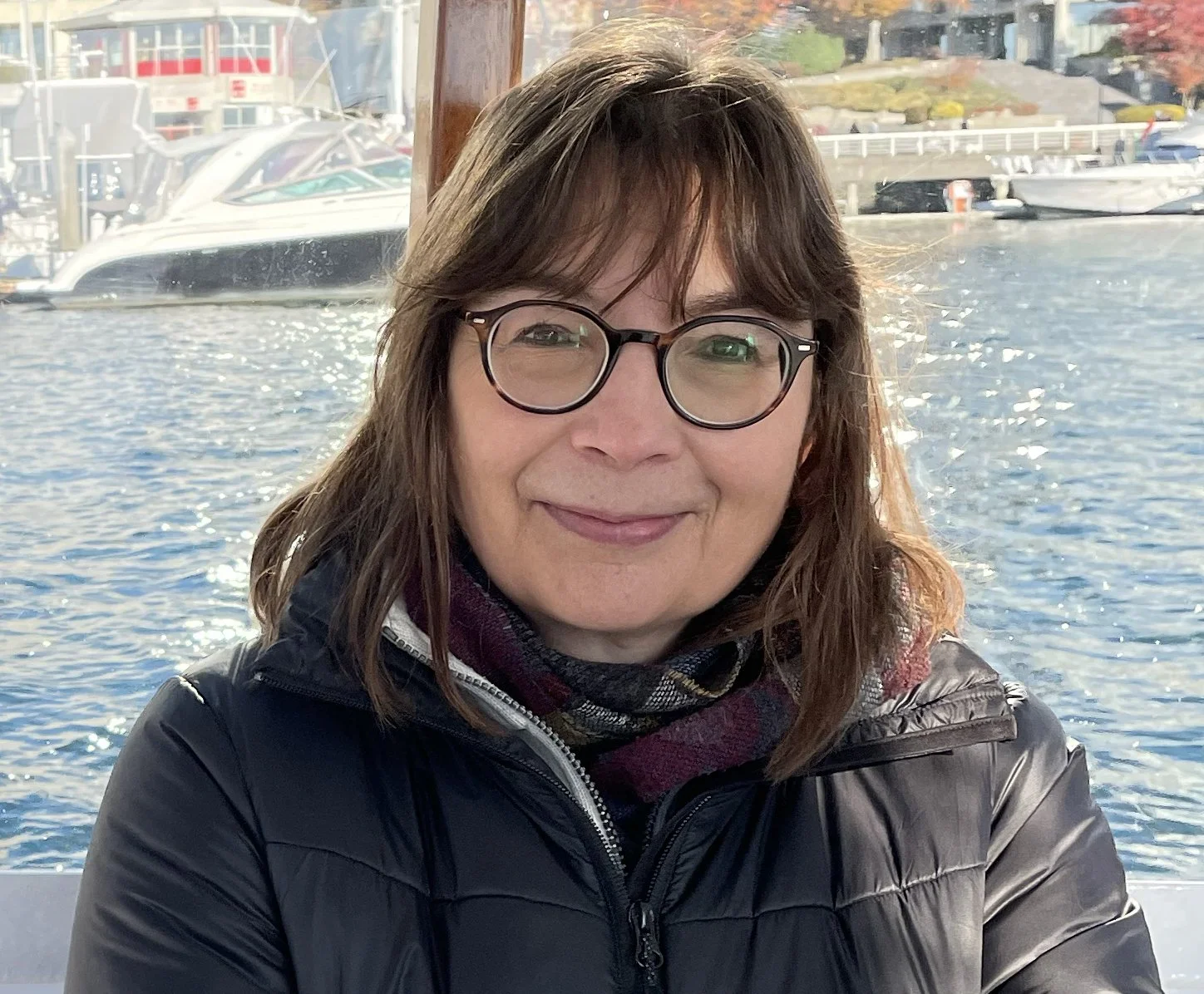
Angelika Stollewerk, Associate Professor Emerita
Evolutionary Developmental Biology | Arthropod Neurogenesis | Conservation Research
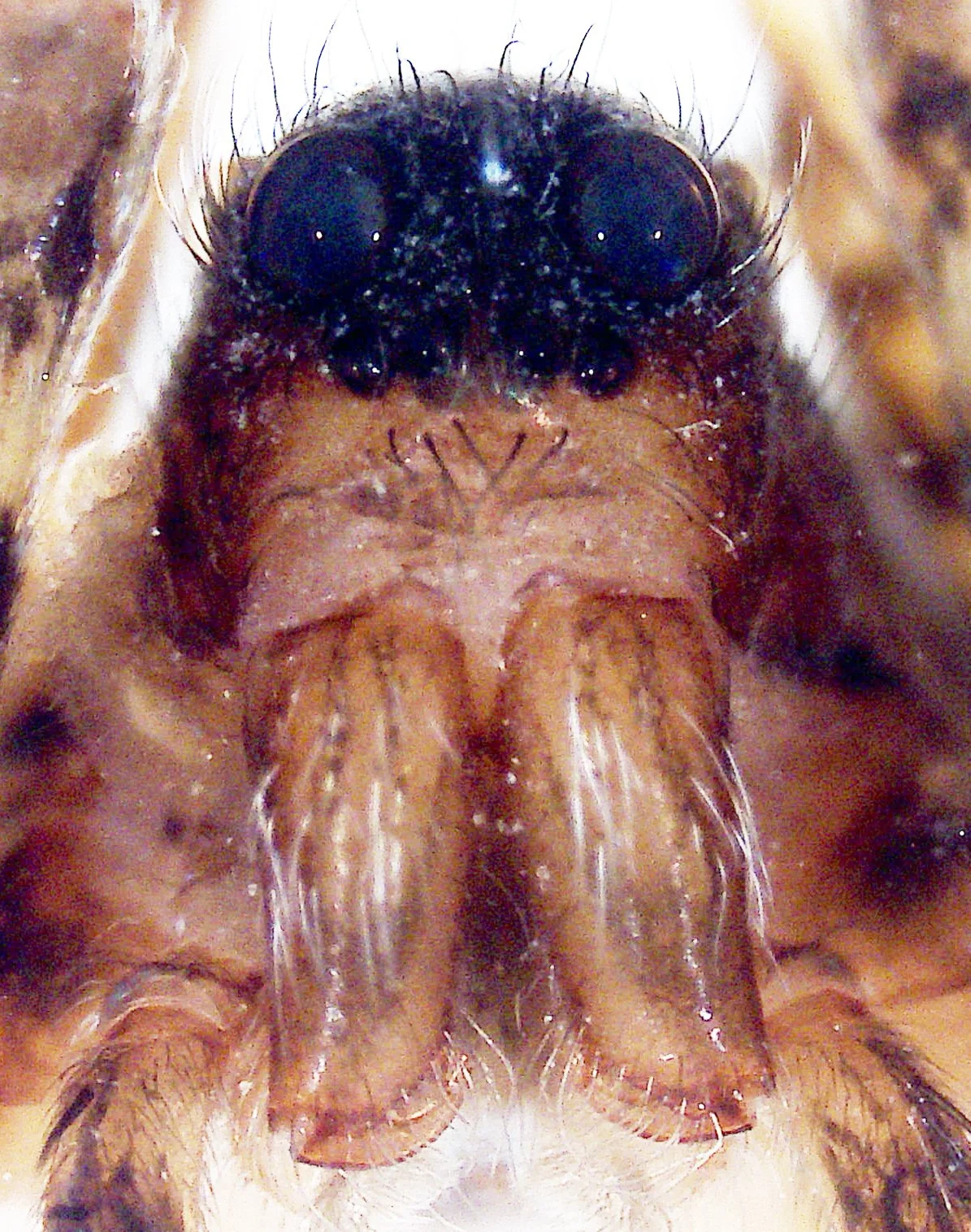
Pardosa prativaga | Photo: Angelika Stollewerk (own work)

Daphnia magna | Photo: Dieter Ebert, via Wikimedia commons, CC BY-SA 4.0

Archispirostreptus gigas | Photo: George Chernilevsky, via Wikimedia Commons, CC BY-SA 3.0

Tribolium castaneum | Photo: Peggy Greb, via Wikimedia commons, CC BY-SA 4.0

Parasteatoda tepidariorum | Photo: Judy Gallagher, via Wikimedia commons, CC BY 2.0

Glomeris marginata | Photo: Stu's Images, via Wikimedia commons, CC BY-SA 3.0
_1.jpg)
Lithobius forficatus | Photo: Darkone, via Wikimedia commons, CC BY-SA 2.5

Euperipatoides kanangrensis | Photo: Martin Smith, via Wikimedia commons, CC BY-SA 3.0

Meridionale ambigua | Photo: Peter Southwood, via Wikimedia commons, CC BY-SA 3.0